Suspicions were not confined to foreign intervention within Russia's borders. Many in Russia looked to developments in other parts of the former socialist world as indicators of what awaited Russia. In the 1990s, that meant primarily the fate of the former Yugoslavia. Though not part of the Warsaw Pact, Yugoslavia could be imagined as a kind of Soviet Union (or even Russia) in miniature. Formed from seven constituent republics to the USSR's fifteen, Yugoslavia was a collection of interrelated ethnicities and linguistic communities that, despite attempts at delicate power-sharing in the wake of postwar Yugoslavia's founder's demise, always had to deal with the problem of unequal numbers: of all the nationalities in Yugoslavia, the Serbs were the plurality. The match between the USSR and Yugoslavia is imperfect: Serbian numerical and linguistic dominance was complicated by the understanding that they shared a common language with many of their non-Serb compatriots. The dominant language of Yugoslavia reflected the numerical superiority of its largest republics: what was then called "Serbo-Croatian" designated the dialects spoken by Serbs, Croats, Bosnians, and Montenegrins, but was not native to all Yugoslavs. Some of the other languages in Yugoslavia had a fairly high level of mutual intelligibility; though Slovenian and Macedonian are very different from Serbo-Croatian, their common origins made learning or deciphering them relatively easy. Smaller populations of Albanian and Hungarian speakers learned Serbo-Croatian as an entirely foreign tongue.
This is not the place to relitigate the Yugoslav collapse, about which there is still little consensus among its former citizens. What is important is the immediate sympathy that the Russian state media expressed for the Serbs in this conflict. While many stressed the historical ties between two Orthodox nations, it is a safe bet that most Russian audiences had to be reminded that these ties "always" existed in order to feel this particular form of international solidarity. This is ironically consistent with the run-up to the Yugoslav Wars themselves, which were made possible by "reminding" people who had comfortably lived side-by-side for decades that they were actually ancient enemies. What Russian politicians and pundits saw in the Yugoslav breakup was both a replay of the end of the USSR and a cautionary tale about Russia's future. The Serbs' benevolent intentions were being misunderstood by hateful nationalist separatists abetted by Western powers, while the push for Croatian independence was actually the resurrection of Nazi-era collaborationist Croatian fascism. This narrative was particularly prophetic, not because it was accurate (it was not, though some Croatian nationalist elements made it easy for the Serbs to make this argument), but because it now looks like a dry run for Russia's own propaganda campaign about Ukraine after Maidan.
The Russian reflexive identification with the nationality that was trying to preserve the Yugoslav union by force would be intensified by the Western European and American support of the republics that declared their independence. Western narratives were far from immune to oversimplification and the power of historical parallels, not to mention a total demonization of the Serbs, but they were nonetheless based on factual reporting about the perpetration of genocide by Bosnian Serbs and the credible prospect of a similar outcome in Kosovo, the Albanian-majority autonomous province located within Serbia. As NATO intervened (first in a 1995 bombing campaign In Bosnia), Russian claims that Yugoslavia was a dress rehearsal for similar intervention in the Russian Federation became easier to make. The NATO bombing of Belgrade in 1999 not only solidified Russian support for Milosevic's regime in Serbia, but it also was the turning point in popular attitudes towards the West: America and NATO could not be trusted to respect the sovereignty of a nation whose actions they deemed crimes against humanity.
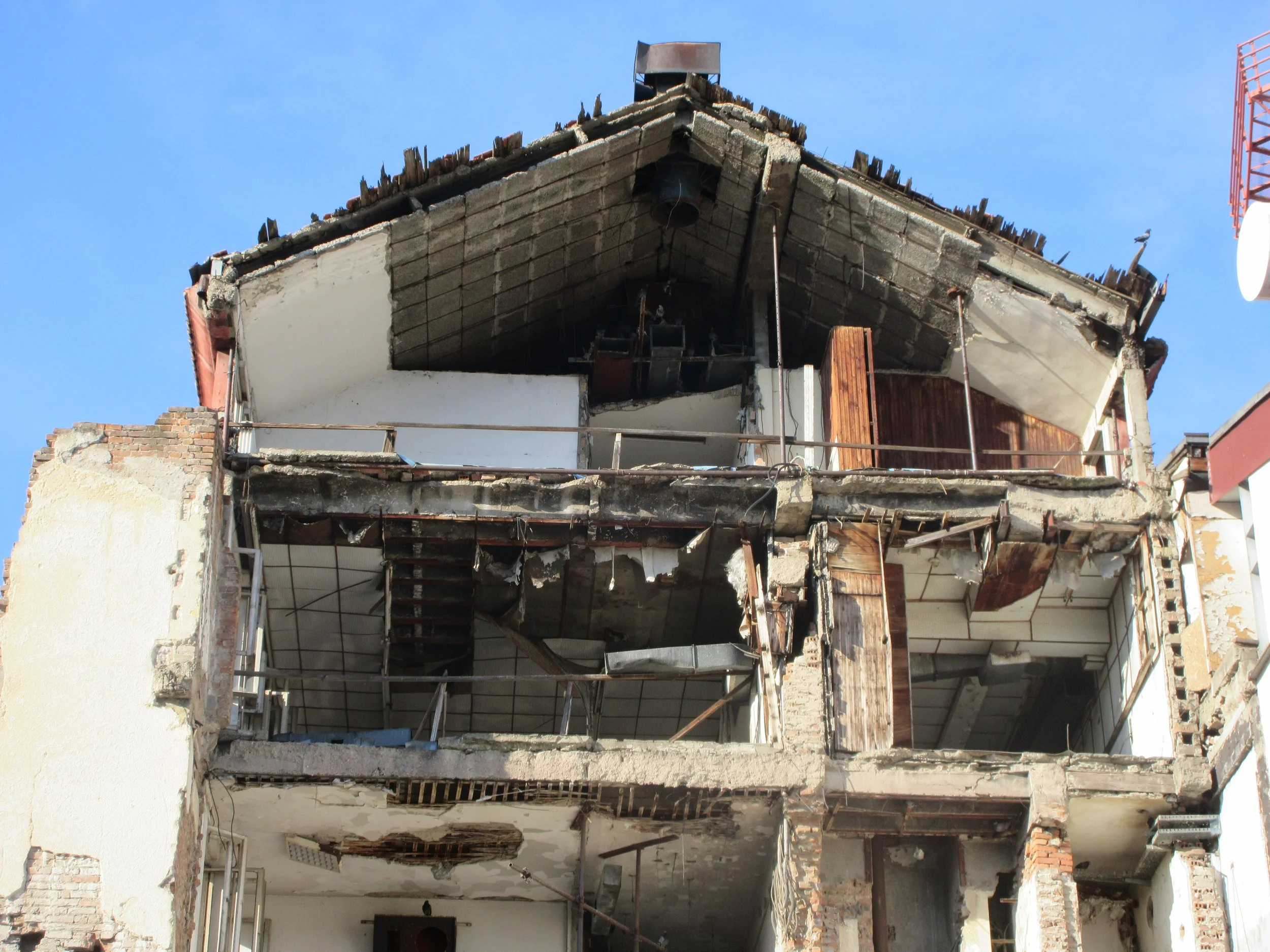
Serbian building bombed by NATO in 1999
This was not the end of Yugoslavia's role as an object lesson for Russia. Internal opposition to Milosevic had been growing steadily, and in 1998 (a year before the bombings), the Otpor ("reistance") movement formed on the basis of pre-existing student protest activity, growing from street demonstrations and graffiti to a powerful anti-government force in the 2000 elections. Their slogan "Gotov je" ("He's finished") turned out to be accurate: Milosevic was voted out of office and, just a year later, sent to the Hague to stand trial. Otpor was a grass-roots democratic movement, but the timing of its activities made it easy for conspiracy mongers to assimilate Otpor to the NATO's attacks on Serbia. Here we have the beginning of the narrative that would come to dominate Putin-era coverage of democratic opposition movements in the postsocialist world: they are Western dupes and CIA fronts advancing European and American interests under the guise of popular revolt.
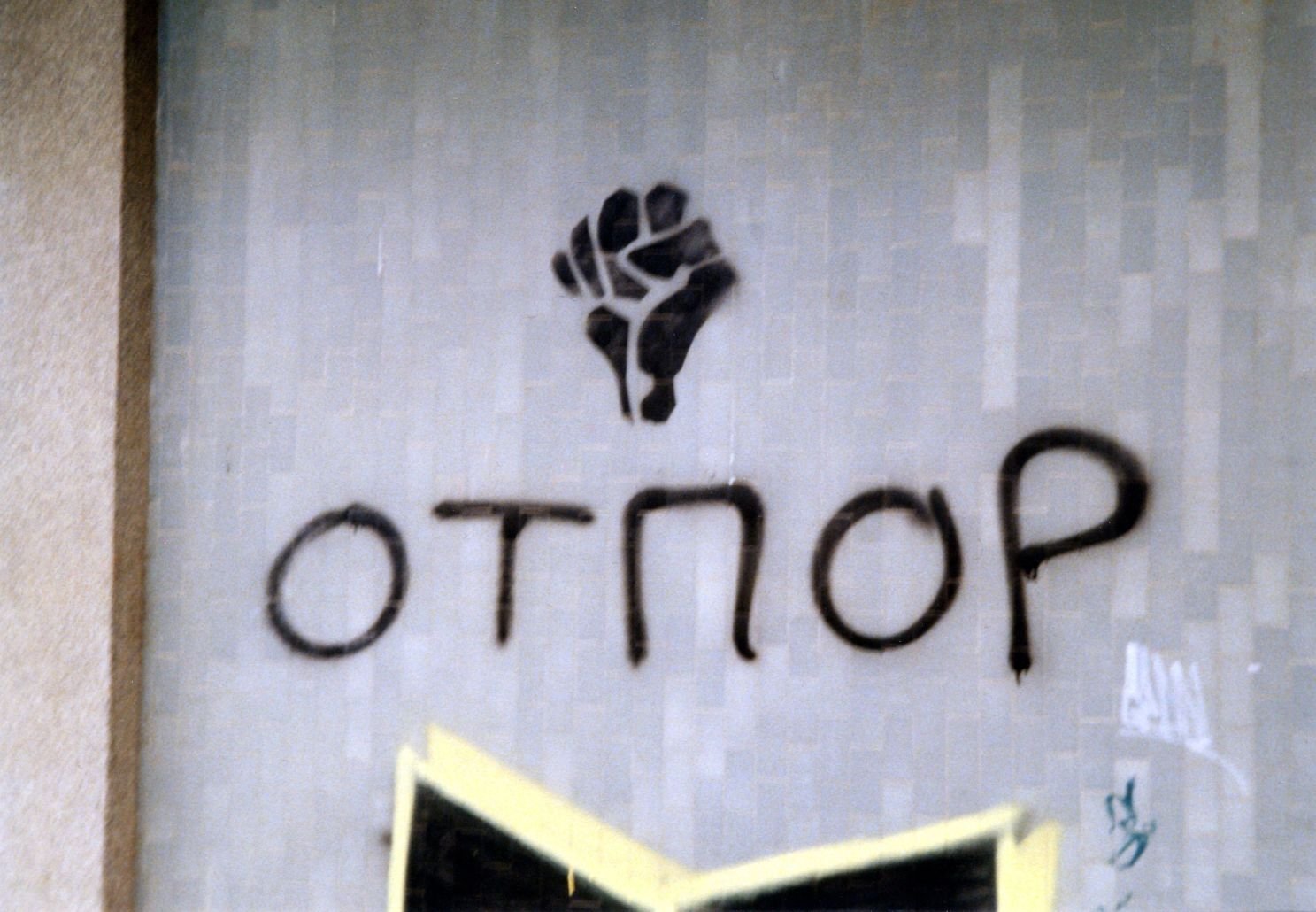
“Resistance”
Next: What Color is Your Revolution?