We are introduced to the G'L-Doses before we official meet Moonshadow himself, and learn quickly that they are, apparently, the embodiment of whimsy. Asking about their motives and purpose is a pointless endeavor. The incredible lightness of the G'L-Doses makes even the hippie Sunflower seem to be a paragon of seriousness by comparison. Sunflower has spent her life searching for meaning, and her already-unstable existence is completely unmoored by her kidnapping/wedding. Her brief union with Moonshadow's father culminates in a "blinding flash" that gives Sunflower two things: her first orgasm, and Moonshadow himself. For Sunflower, the G'L-Doses are a kind of inspiration.
The rest of the G'L-Doses appearances' seem to defy any logic besides their occasional value as a plot shortcut. Or at least, their obvious appearances function that way. Moonshadow is also frequently haunted by apparitions of his mother, his crazy Aunt Ettie, and the first Moonshadow; on at least one occasion, the art suggests that these hauntings are, in fact, G'L-Dose manifestations. Asserting that this is definitely what they are (or all they are) would be contrary to the spirit of Moonshadow, a book that is devoted to the numinous power of inexplicably mystery. At the very least, the contrast between the two types of visitations (G'L-Dose and the dearly departed) is suggestive. When the apparitions take on human form, Moonshadow is (literally) haunted by the ghosts of his past, there to impart meaning and provide life lessons at critical junctures. The G'L-Dose do no such thing--they merely intensify the mystery, whimsy, and absurdity of the story.
All of which brings us back to the book's main idea: the tension between meaning and absurdity, which turns out to map rather nicely onto Moonshadow's own heredity. Sunflower's individual decisions in her pre-Zoo life may appear ridiculous to skeptical observers such as her parents, but they are motivated by a search for sense and purpose. Not so with Moonshadow's father. Instead, the G'L-Doses embody (to the extent that they even have bodies) the non-rational, ineffable transcendence to which so many of DeMatteis's characters aspire. In Moonshadow, DeMatteis' and his collaborators make New Age enlightenment thinkable, visible and (to the less spiritually inclined) palatable through the novel idea of depicting satori as a glowing, grinning ball of light. The book ends abruptly (or rather, begins to end abruptly) after Ira dies, Flobadiah runs off to join a group of pilgrims, and Moonshadow has one last vision of his mother, who tells him he is not alone. Here the narrator steps in for what was, originally, the final time, and warns his readers that, like it or not, they are about to witness a mystical experience, one that is impossible to convey to anyone's satisfaction. Moonshadow is guided to a tighrrope over an abyss, realizes he has been balancing his entire life, and can balance no longer, and plunged "down...into the mystery." He sees visions from various points in his life, "In my mother's haunted eyes, in my father's maddening grin. / Something I could never HOPE to understand.../.. but understood nonetheless." The scene works, once again, thanks to Muth's beautiful paintings, but it also manages to restate many of the book's themes (including the balance between mother-as-history and father-as-insouciance), before ending with a repetition of the Blake poem on which the series began.
Should we be surprised that all of this is accompanied by the "Pop! Poof! Ping!" that heralds a G'l-Dose's arrival, or that Moonshadow's spherical father floats above the entire scene? This is where the original series ends: with a celebration of the beauty of mystery and a nearly-full page image of the young adult Moonshadow displaying a happier and freer smile than we have seen anywhere in all 12 issues.
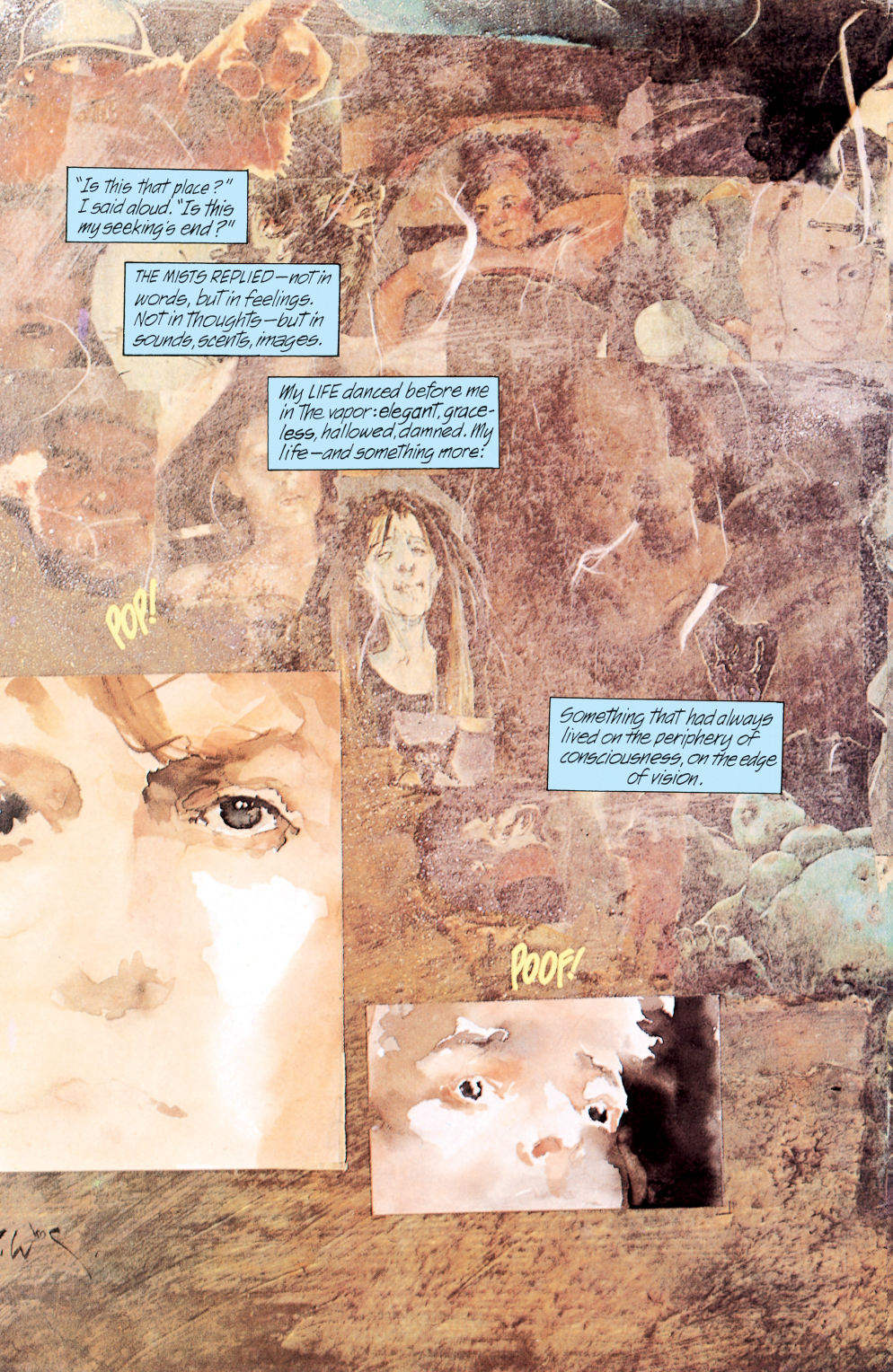
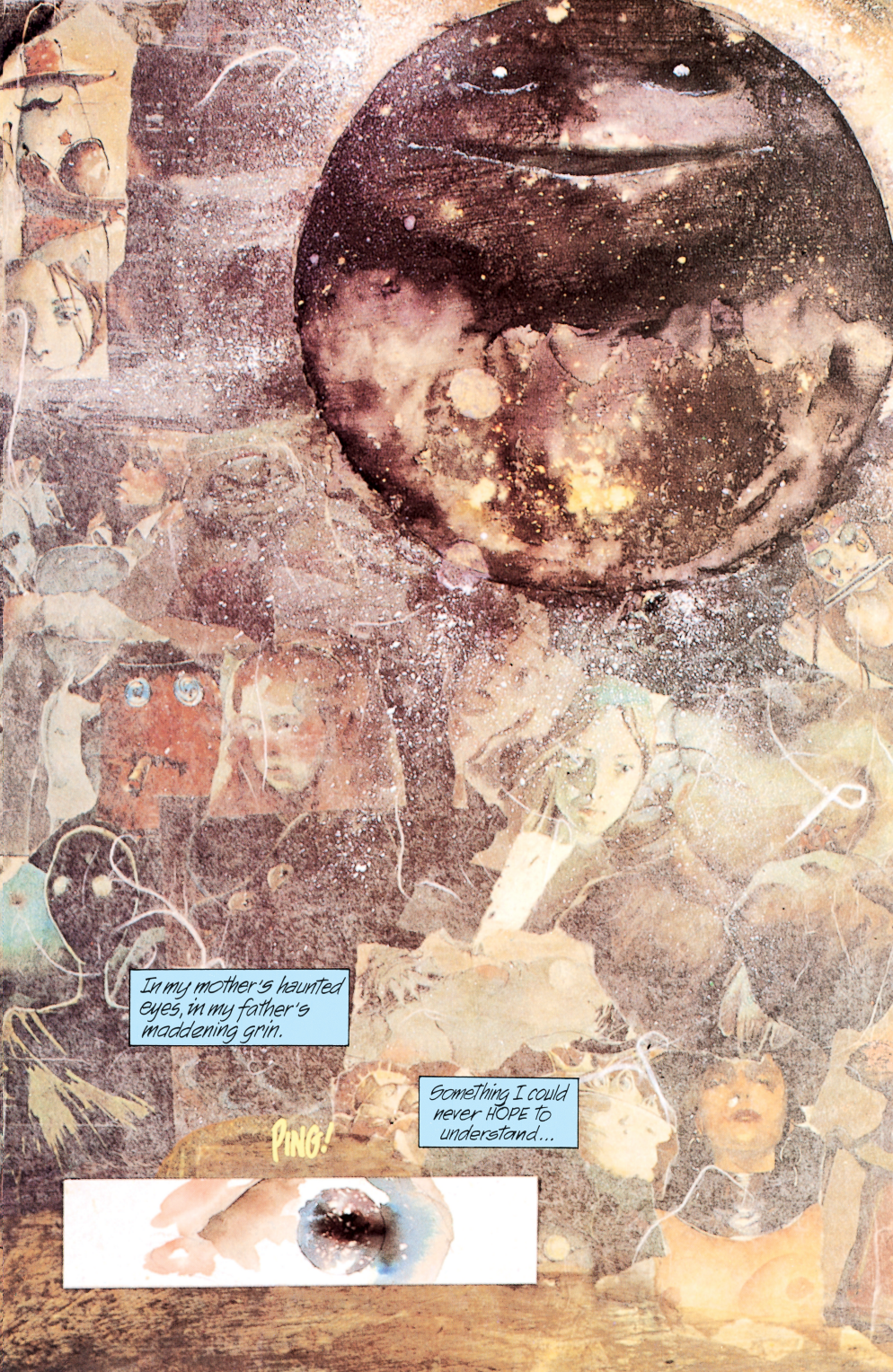
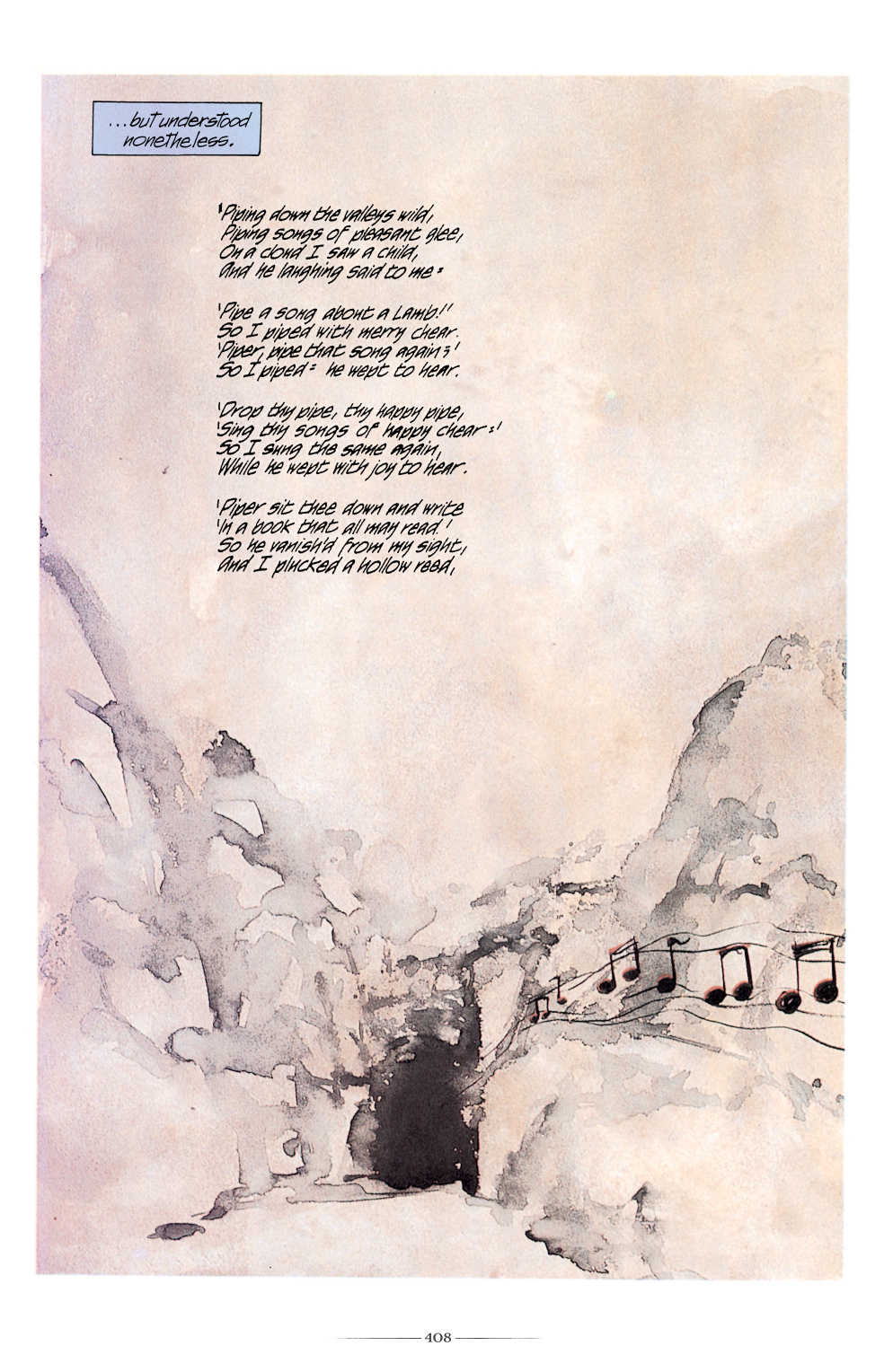
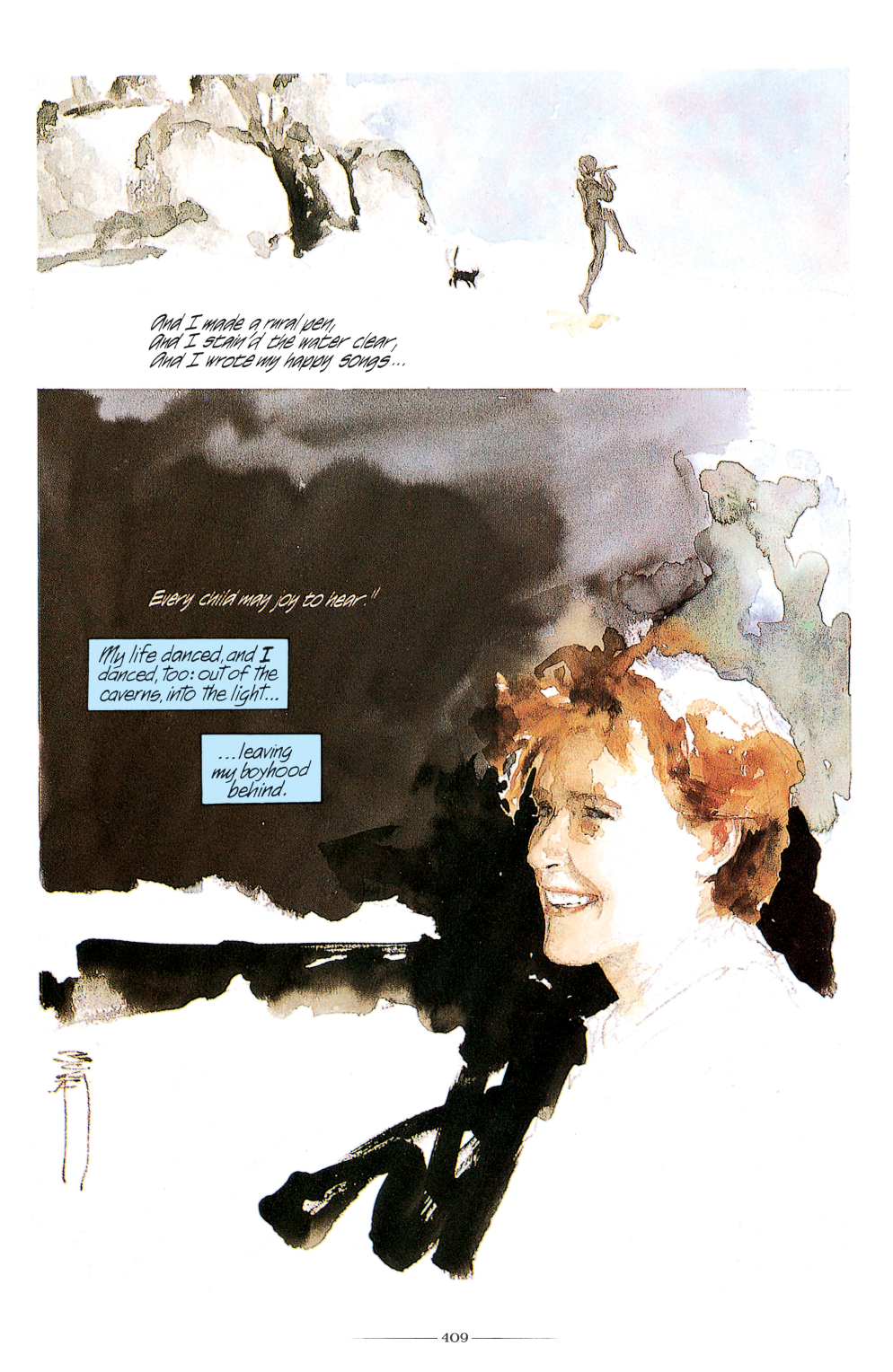
It's a wonderful conclusion to an unusual series; unfortunately, DeMatteis decided to ruin it, not once but twice. All the collected editions of Moonshadow include three additional pages focusing on the narrator, Moonshadow as an old man:
"What was that something I met there, wheeling in the mists? Echong in the Cave?
Was my soul exalted? My heart filled? My life changed forever?
It's been so long that frankly--
I can't remember.
And so I conclude my song of innocence; the tale, not of my life--but of my Awakening. Dear readers, dear FRIENDS, I bid you...
...Farewell."
Is this one last dose of bathos? Whatever it is, it feels clumsy and unnecessary after a moment when the book really earned a moment of transcendence. In 1997, DeMatteis and Muth return to the character with Farewell, Moonshadow, now packaged as the epilogue to the Definitive Expanded Edition. Now the authors abandon the alternation between a standard comic book combination of layout and dialogue and a format that approaches illustrated text in favor of the latter. Muth's unfailiingly beautiful wordless, painted pages alternate with white pages of DeMatteis's prose. We follow the rest of Moonshadow's life, all the way up to his death as a very old man. As a result, the book spends time on his relationship with the insipid Bettina, a girl whose entire existence is to serve as Moonshadow's true love (a role that does not require a personality). Besides the art, Farewell Moonshadow offers little to the original story.
Except for the one thing that it has in common with the extra three pages tacked on to the end of the original Moonshadow series. In the middle of the book's final monologue, Muth devotes the bottom half of the page to close-ups of Moonshadow, in three panels that zoom in from his face to his eye to the iris. In the last panel, the iris resembles a globe full of stars. The top of the next page consists of three panels that mirror the previous three, starting with the equivalent of the iris, and ending, once again, on Moonshadow's face. But now the perspective is reversed: it is Moonshadow himself who is looking at the two circular images, the first of which is not his iris but a grinning G'L-Dose, whose face, in the second panel, bcomes a smiling distortion of that of Moonshadow as a young man. We have always known that Moonshadow is part G'L Dose, but now we know what part: his father's legacy is his joy.
The last eight pages of Farewell, Moonshadow are almost wordless, save for the first page (the final text page, and six words at the top of the third:
When Moonshadow was an old man (but young enough to know better) he returned to a town he's once lived in: a town built of Memory, Innocence, and a Joy infrequently glimpsed...
....in his long years of wandering.
Moonshadow sits in front of a birthday cake as the moon rises above him. He abruptly falls forward in his wheelchair and dies. The stunned onlookers watch as his body glows, fades, and turns into a smiling sphere (with the cat Frodo sitting on top), The sphere ascends into the sky and merges with the moon.
Moonshadow has become one with (part of) his namesake, but, more important, he is now a G'L-Dose.
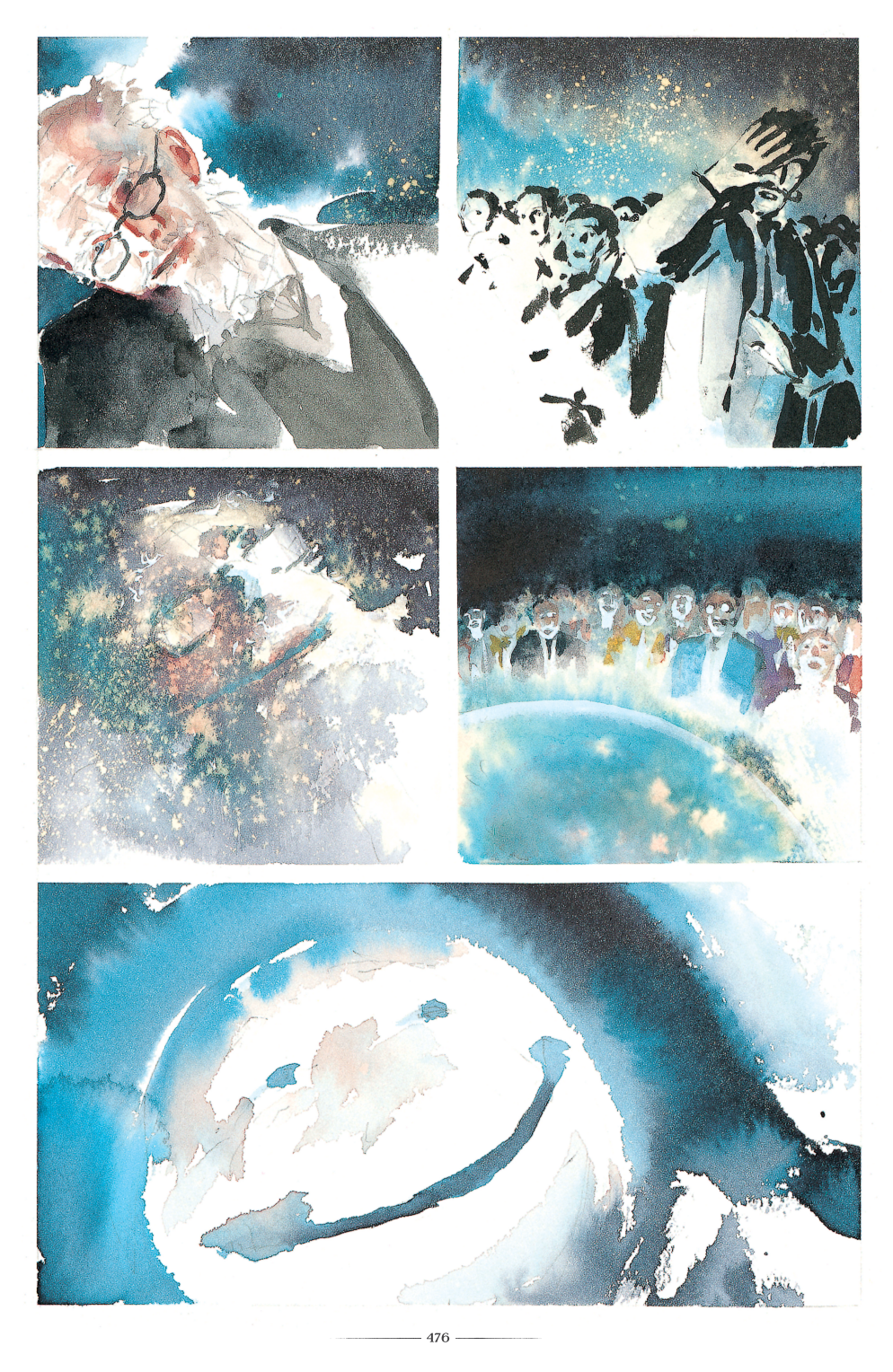
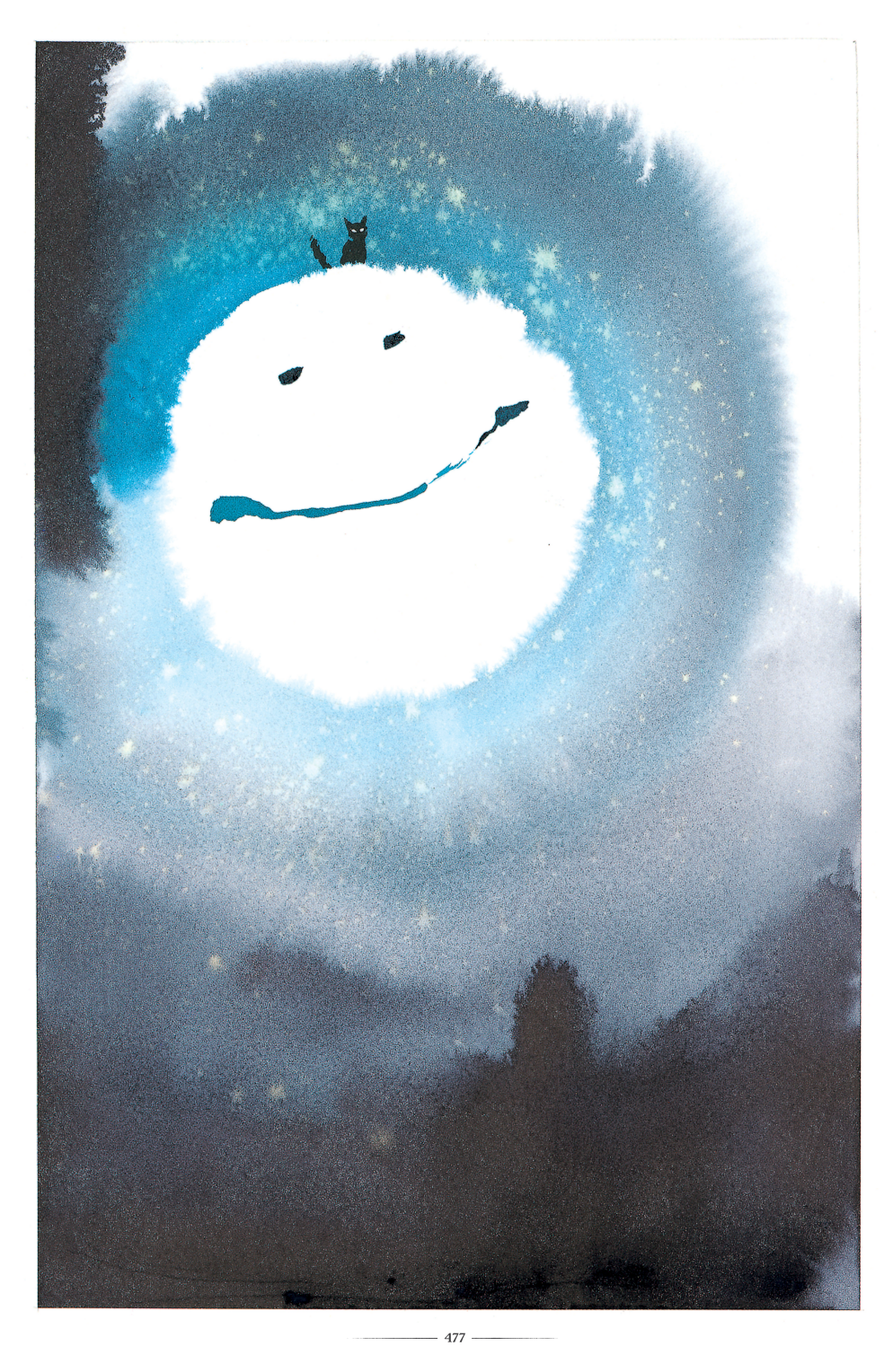
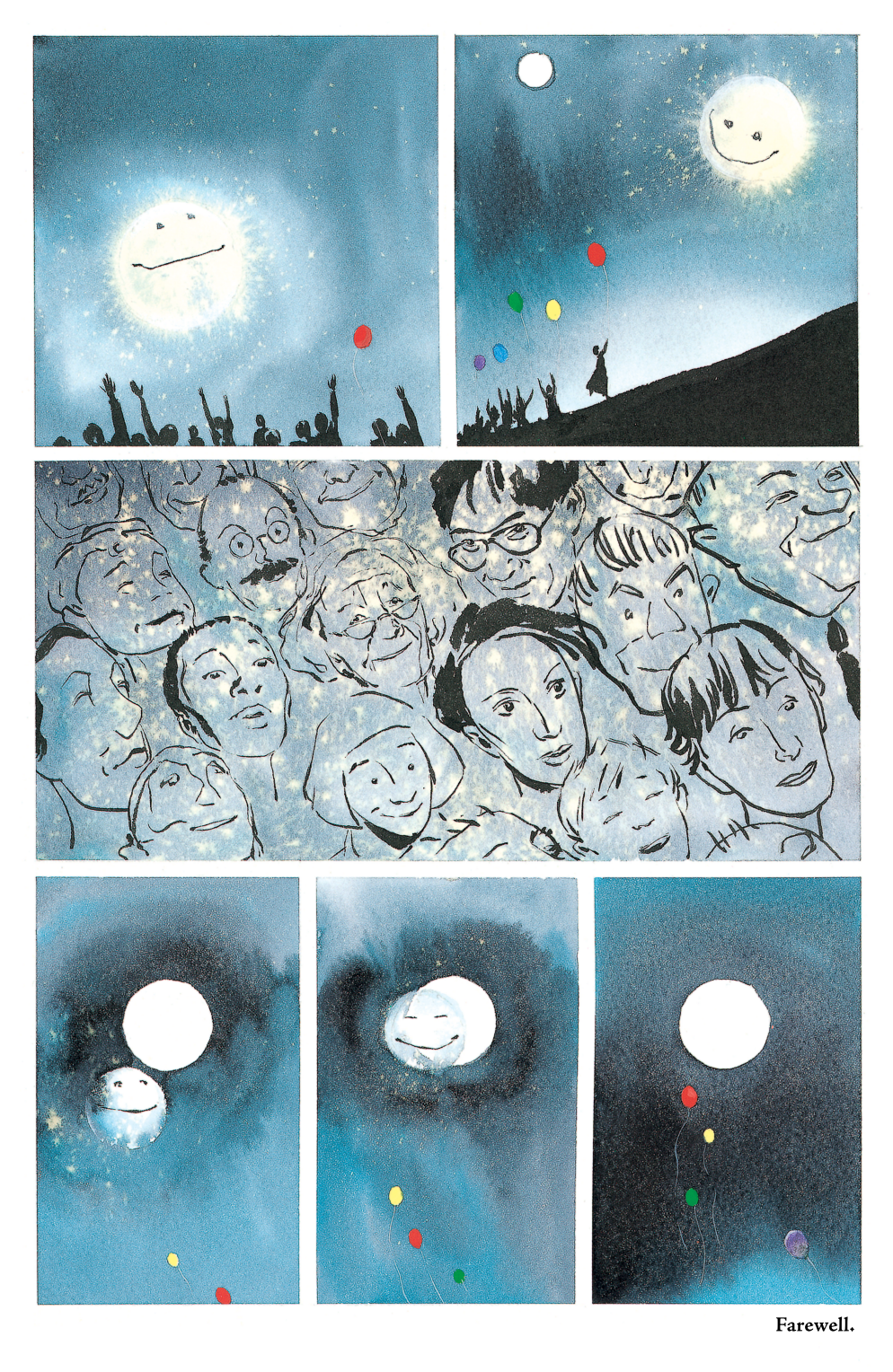
Again, I don't want to ruin the "magic" by putting too fine a point on it; the point of reading Moonshadow is not to try to figure out an implied mythology or lore that makes it all hold together. Nontheless, we are left with the strong implication that the G'L-Doses are a form of pure spirit, unencumbered not just by physical bodies, but by the morality (and moral conundrums) that the body drags with it. There is a Platonic logic here, one that fits with the overall ethos of DeMatteis' work while also literalizing the metaphor created when the writer named his hero after this particular Cat Stevens Song and placing him within a universe filled with sentient, glowing orbs. Moonshadow was Moonshadow because the soul is to the body as the moon is to the shadows it cast: when he was alive, Moonshadow's body was the shadow. Now he is the moon.
Next: DeMatteis's Marvel