Chapter 5:
Truth, Justice, and the American Way of Death
Dead Animals
Though it began as a random set of cheap, disposable entertainments that were never meant to amount to anything, the North American corporate comics industry evolved into something quite different. Market pressures, the changes in the audience, the rise of fandom and the familiar route from fan to industry pro, the growing understanding of the value of a trademark and the possibilities for cross-media fertilization, all played their role in sowing the field we have today. The previous chapters have explored the often-productive tensions that arise when the boundaries of the genre are pushed. Superhero comics have an ongoing problem with their relationship to the "real world," the decades of lore that they have accumulated (continuity), the cyclical desire to shake things up, and the role of the justice system that the heroes purport to uphold. To varying degrees, all of these phenomena have one thing in common: the problem of endings.
Superhero comics are obsessed with finitude even as they fight against it. This is no doubt an artifact of the publishing model, which is based on serialization at a pace that is necessarily slower than real time. But it also comes back to one of the foundational appeals of the superhero genre: childhood and adolescent wish fulfillment.
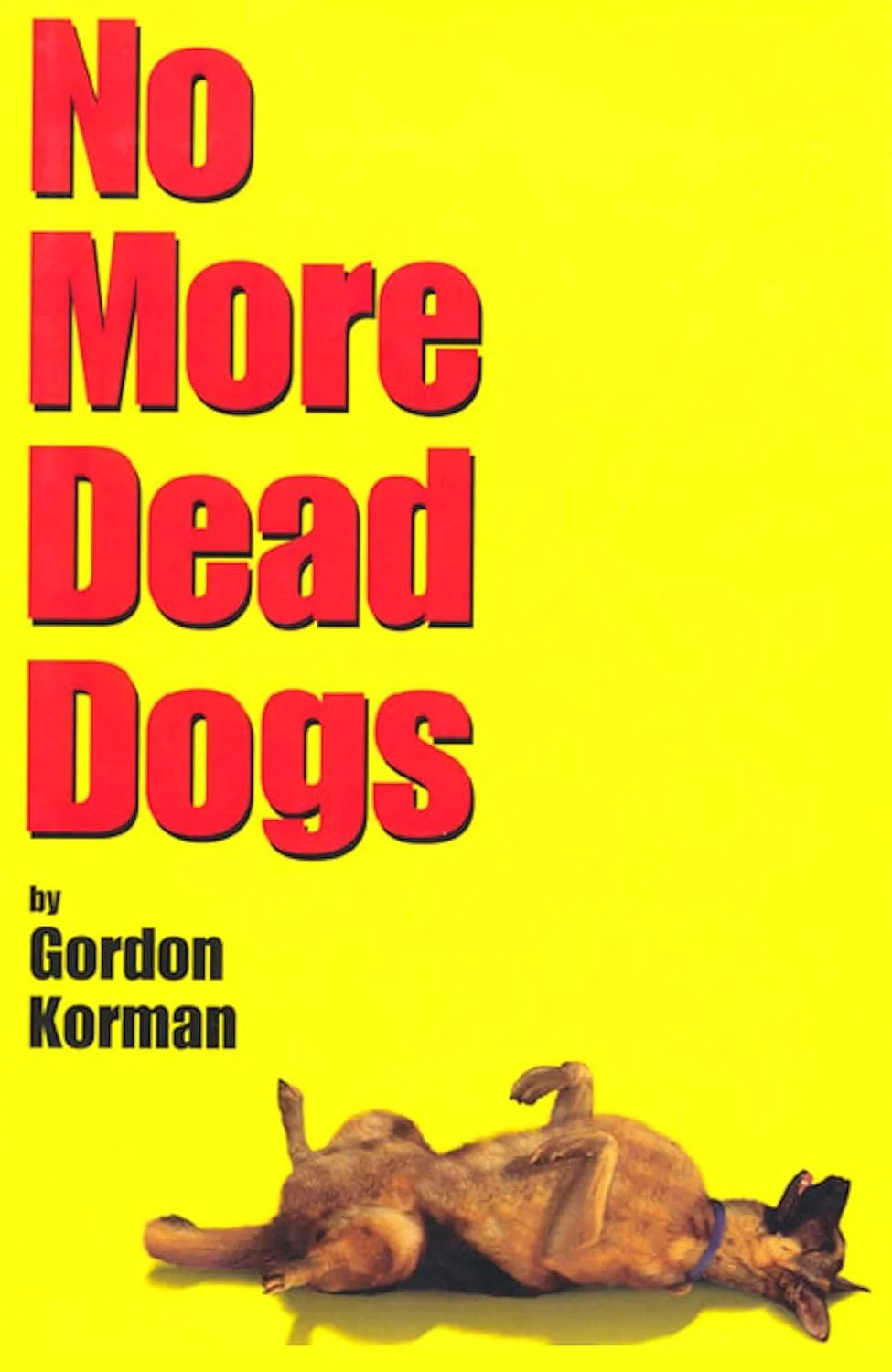
No dogs were harmed in the making of this book cover
Developmentally, childhood is when we become aware of death; statistically, adolescence is when we court it. Children at some point learn of the death of someone they know, while reckless adolescents tend to act as though they are immortal (when they are not contemplating suicide). There is a reason that so many famous works of children's literature feature the death of animals, whether pets or sentient fantasy characters: Old Yeller, Where the Read Fern Grows, Charlotte's Web, just to name a few. An Amazon search yields a long list of available books about dead and dying pets: The Day Scooter Died; Missing Maggie: The Death of a Pet; Dog Heaven; The Berenstain Bears Lose a Friend. Inevitably, the trope lends itself to satire, as witnessed by Gordan Korman's 2000 novel No More Dead Dogs. Middle Schooler Wallace Wallace objects to a book report assignment on the novel Old Shep, My Pal, by Zak Paris (invented by Korman):
"I wasn't surprised," I said. "I knew Old Shep was going to die before I started page one."
"Don't be ridiculous," the teacher snapped. "How?"
I shrugged. "Because the dog always dies. Go to the library and pick out a book with an award sticker and a dog on the cover. Trust me, that dog is going down."
"Not true!" stormed Mr. Fogleman.
"Well," I challenged, "what happened to Old Yeller?
"Oh, all right," the teacher admitted. "So Old Yeller died."
"What about Sounder?" piped up Joey Quick.
"And Bristle Face," added Mike "Feather" Wrigley, one of my football teammates.
"Don't forget Where the Red Fern Grows," I put in. "The double whammy--two dogs die in that one."
Why so many children's books about dead pets? And, for that matter, why do parents keep bringing home furry playmates who are inevitably going to die while their children are still young? Because, heart-rending though their loss may be, losing an animal is easier than losing Grandma. Or worse, Mom or Dad. Animals are the training wheels of death.
Next: Spider-Man and His Amazing Dead Friends