Crisis of Infinite Memberberries
As we have already seen, the two decades between these two Crises witnessed a bit of formal experimentation with crossover events, including limiting them to annuals, containing them within shorter miniseries along with intruding into single issues of various ongoing titles. Infinite Crisis might be considered a serious formal innovation in the structure of the Event. Not only was the way to Infinite Crisis prepared by multiple plotlines developing over the previous year, it was kicked off by a single issue "Prelude" that in turn launched four different miniseries (Villains United, The Rann-Thanagar War, Day of Judgment, and The Omac Project) as well as the tie-in miniseries DC Special: The Return of Donna Troy. Only when these series were concluded was the true nature of Infinite Crisis revealed: Alexander Luthor, the Golden Age Superman and Lois, and Superboy-Prime were back, with Prime and Luthor as the primary antagonists for a seven-issue miniseries.
As is typical of a Johns project, however, the novelty of his approach was eclipsed by a less commercial comics event masterminded by a more celebrated author: at roughly the same time, Grant Morrison was publishing Seven Soldiers,which also happened to be a revamp of a Silver Age storyline whose roots stretched back to the DC's Golden Age. Morrison crafted a convoluted story about a team of obscure characters who never actually come together as a team. Seven Soldiers launched with a zero issue featuring yet another set of obscure characters who die before the final page, followed by seven different miniseries fearing each of the "Soldiers," and wrapped up in a one-shot called Seven Soldiers 1. Seven Soldiers did not deliver many of the usual pleasures of a DC event (and Morrison's subsequent contribution to the "Crisis" genre, Final Crisis, offered even fewer), but they made the complexity of Infinite Crisis look like child's play.
Again, Infinite Crisis was a response to a different challenge. As the commemoration of an event that mined DC's decades-long past in order to chart a new future, Infinite Crisis may as well have been named "Infinite Regress": if there were any doubts that DC was going to put an end to regular apocalyptic revisions of its storyworld, Infinite Crisisset them to rest. Like Zero Hour, Infinite Crisis addressed the incongruities that Crisis on Infinite Earths left in its wake, while addressing the ethics and ramifications of nostalgia head-on. DC's cleverest move here was to double down on Infinite Crisis's derivative nature: an unabashed sequel turned out to be just the thing to justify another Crisis-like revision of continuity. Until the year leading up to Infinite Crisis, the status of Crisis on Infinite Earths within the DC storyworld was muddled. Morrison had taken the opportunity to revisit it just a few years afterwards in Animal Man, but using metaphysical and metafictional devices that allowed the storyline to go wholly unnoticed by everyone else in the DCU.
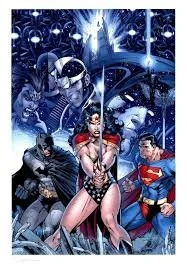
Apparently, Superman’s real Kryptonite is constipation
Only three of the characters associated with the Monitor remained in play after the original Crisis: Pariah, who was immediately forgotten until he was murdered by Alexander Luthor in one of the Infinite Crisis preliminary miniseries; Lady Quark, the only surviving hero of Earth-Six, who, after a brief appearance in Starman, joined L.E.G.I.O.N. (a twentieth-century precursor the Legion of Superheroes) and wa killed in the line of duty; and Harbinger, the Monitor's assistant who could split herself into multiple bodies. Harbinger has a few guest appearances among the Amazons of Themiscyra before sacrificing herself in 2004 to save the most recent incarnation of Supergirl. Otherwise, the Crisiswould only be briefly referenced in a manner suggesting that some of the characters remembered something momentous had happened, but that none of them remembered the multiverse.
Infinite Crisis, then, worked with memory and history on two levels: for the readers, the nostalgia factor was undeniable: who had really expected the four Crisis refugees to return from the limbo "paradise" into which they had escaped at the end of the maxiseries? Was it possible that the Multiverse would return? Were Alexander Luthor and Superboy Prime correct in their dismissal of the post-Crisis DCU as miserable and tainted?
Within the DC storyworld, the situation was more complicated, and also more potentially gratifying: rather than nostalgia, the characters underwent anamnesia: one by one, some of them began to remember both the Crisis and the multiverse that replaced it. The puppets had started to see behind the curtain (though not in as blatantly metafictional a manner as in Grant Morrison's Animal Man). Certainly seeing Power Girl, originally the cousin of Earth-2's Superman before having her origin repeatedly muddled post-Crisis, confront several different possible "real origins" over the course of her own four-issue Infinite Crisis prequel storyline, eventually to discover that she was exactly who readers always new her to be (the Earth-2 equivalent of Supergirl), was intensely gratifying. All of this suggested a possibility of measured restoration: even if the DC multiverse failed to return, the memory of the DC multiverse was back.
This was an event that impinged on every corner of the DC Universe, with prequel miniseries focusing on the DC outer space characters (The Rann-Thanagar War), Alexander Luthor's efforts to get all of the villains under his control (Villains United), the world of magic (Day of Judgment), and a conflict among Trinity (Batman, Superman, and Wonder Woman) that breaks their trust in each other and undermines public confidence in the Justice League), Yet despite all that, the overall plot is rather simple, since the prequel series were not all that significant in the grand scheme of things. Alexander Luthor, Superboy-Prime, and the Earth 2 Superman and Lois had spent the years since Crisis watching Post-Crisis Earth from their perch in a timeless, boring limbo. Lois was aging and dying; Superboy-Prime was aimless and frustrated, and Alexander Luthor was scheming. Alexander exploited his comrades' horror at the cynicism and darkness of the new continuity (the rape and murder in Identity Crisis, the crippling of Barbara Gordon, the constant infighting among the heroes) in order to convince them to help him change reality once again. He told them he would recreate Earth-2 which would somehow save Lois's life, though his real plan was reminiscent of Zero Hour where Parallax wanted to build the perfect timeline, Alexander would construct the perfect Earth.
All in all, it made for a compelling story: Power Girl's reunion with her cousin and Lois after years of not even remembering them; the Golden Age Superman's grief over Lois's death partway through the series; the brief return of the Golden Age Wonder Woman and her meeting with her current counterpart; the death of Conner Kent (the post-Crisis Superboy)-- like Wolfman and Perez, Johns and his collaborators made sure to ground their cosmic, universe-altering saga in emotional moments and interpersonal connections. But Infinite Crisis will always be remembered for one sublimely ridiculous element: the Superboy punch.
Next: Violence Really Does Solve All Our Problems!