Fixing the Unfixable
DC Comics will never be rid of Superboy Prime; as of August, 2025, he is back again, and this is after several returns since Johns' last word on the character. The love/hate relationship DC's readership has with Prime is matched only by Prime's own mixed feelings about the DCU in which he lives. Since his introduction in the first Crisis, Prime has functioned as the persistent remainder left after each Crisis's long division of the the DC continuity, a remainder that is also a reminder: the reminder that any attempt at fitting in "everything" will always leave something out, and will always result in dissatisfaction. Starting with Infinite Crisis, Prime has brought into focus the persistent dysfunctions in DC comics storytelling and its reception. The problem is the very nostalgia that Johns himself handle so capably in Infinite Crisis and his own pre-Infinite Crisis work: by fixing the "mistakes" of the present while forging new connections to the past, Johns raises the possibility that nostalgia can be successfully managed at the same time that the story world moves forward. Yet just five years after Infinite Crisis, Johns writes Flashpoint and masterminds the New 52 initiative, an initial sales dynamo that quickly peters out, prompting him five years after that to mastermind DC Rebirth, which brought back almost everything the New 52 jettisoned.
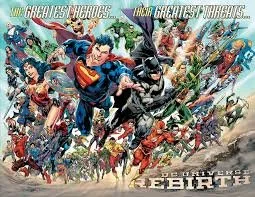
Ok, is everything clear now?
Superboy Prime is also a reminder of the forces that always threaten to drain an Event of its "Event-ness": nearly every change can and will eventually be clawed back. Every Event, no matter how successful, will, through the inevitable impact of retroactive continuity and the corporate mandate for further Events, only be eventful locally, during the time of publication. The future will render it a pseudo-event.
As a revisitation and revision of Crisis on Infinite Earths, Infinite Crisis confirmed what Zero Hour hinted at: from now on, DC could not be satisfied with events that merely threatened the destruction of the DC Universe; for an event to count, to be a true crisis, DC's own continuity had to be at stake. At times, this can work as clever metafiction (certainly when Morrison played with Crisis in Animal Man, though more muddled in Final Crisis). But, in what may be the greatest irony brought on by Crisis on Infinite Earths, an idea whose original incarnation was meant to simplify continuity for the purpose of maximal reader accessibility mutated into a hermetic, self-referential phenomenon designed for the most dedicated readers (who still could benefit from footnotes).
All of which makes Superboy Prime an appropriate stand-in for multiple versions of the implied reader, from benevolent and engaged to fuming troll. With his metafictional viewpoint now a standard feature of the character, he fills the functions of Crisis on Infinite Earth's Pariah (the frustrated witness) and the Psycho-Pirate (the person within the story who has an outsiders/reader's knowledge of the universe in which he functions). He is no longer the one who punches reality into shape. That baton is passed on to others.
Next: Breaking Watchmen