One of Our Submarines (Is Missing)
Far more telling is the state's response to lethal tragedies and acts of mass violence whose victims, in a more conventional necropolitical order, would not be considered expendable. We have already mentioned Putin's laconic, unsympathetic response to Larry King's question about the Kursk submarine disaster, but that was only a small, Western-facing moment in a longer story about the Russian state's treatment of its citizens' deaths. The Kursk submarine sank on August 12, 2000, only months after Putin's first election to the presidency, and the state's response was a combination of familiar, Soviet-style denial (the first official acknowledgement that the sub was missing came two days later), post-Soviet spin, and a PR failure eclipsed only by the scale of the disaster itself.
The government's reaction to this crisis demonstrates a shockingly cavalier attitude towards the fate of the crew; their rescue was clearly not the top priority. It was far more important that Russia's leadership save face. It took nine hours for a search to be ordered, three more to alert the Kremlin, while Putin himself was informed of the accident only the following morning. The president remained on vacation on the Black Sea. The following day, long after learning that the sub was lost, the Northern Fleet admiral told journalists that the exercise in which the Kursk took part was a great success. Meanwhile, the Kremlin refused numerous offers of assistance from Western nations, even as the Russian fleet's own rescue efforts were leading nowhere. When the news of the crew's deaths was finally confirmed days later, another fleet admiral claimed that the Kursk was lost as a result of a collision with a NATO vessel. Indeed, this theory, which was part of the first briefing to the Kremlin, is likely one of the reasons that the government was so reluctant to accept foreign help (British and Norwegian deep sea divers were eventually permitted to assist, but with restricted access to the sub itself).
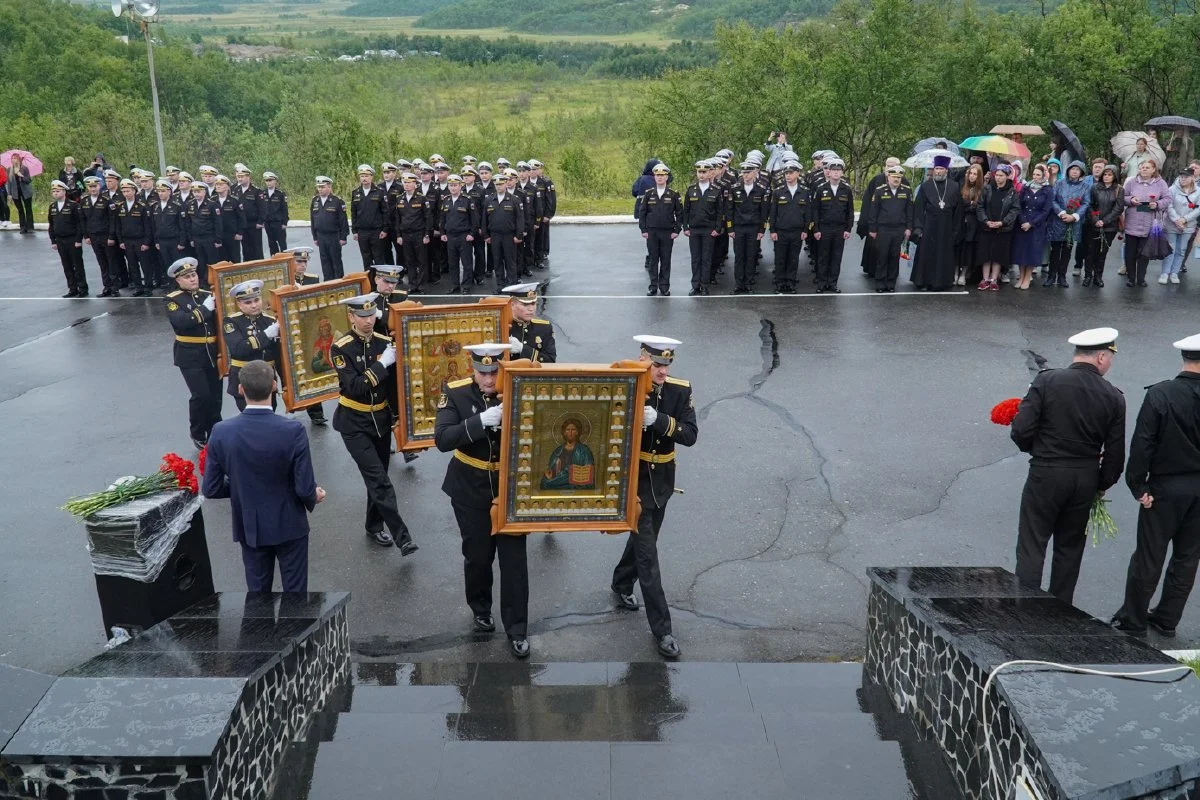
At the 25th anniversary of the Kursk disaster. From Wikimedia Commons.
When Putin finally met with the families of the victims on August 22, he was completely unprepared for the outrage with which he was received. One sailor's mother declared that Putin and his government had lied to the families, calling the president a "pig" and shouting, "They're dying down there for $50 a month, and you don't care.’ She was forcibly sedated and carried away from the scene. The parents' fury was matched by Putin's own. The president blamed the oligarchs and the media for the sad state of Russia's military, and declared his intention to punish the media for "lying."
The Kursk disaster would be the first of several bungled responses to emergencies that highlighted the unimportance of the lives of ordinary Russians when the state's reputation was on the line. As the government increased its control over state media and monopoly on the news, there would be fewer opportunities for heated confrontations between the country's leadership and the people they were called on to lead. Disasters such as the sinking of the Kursk would be prominent exceptions.
Next: Captives of the Caucasus